
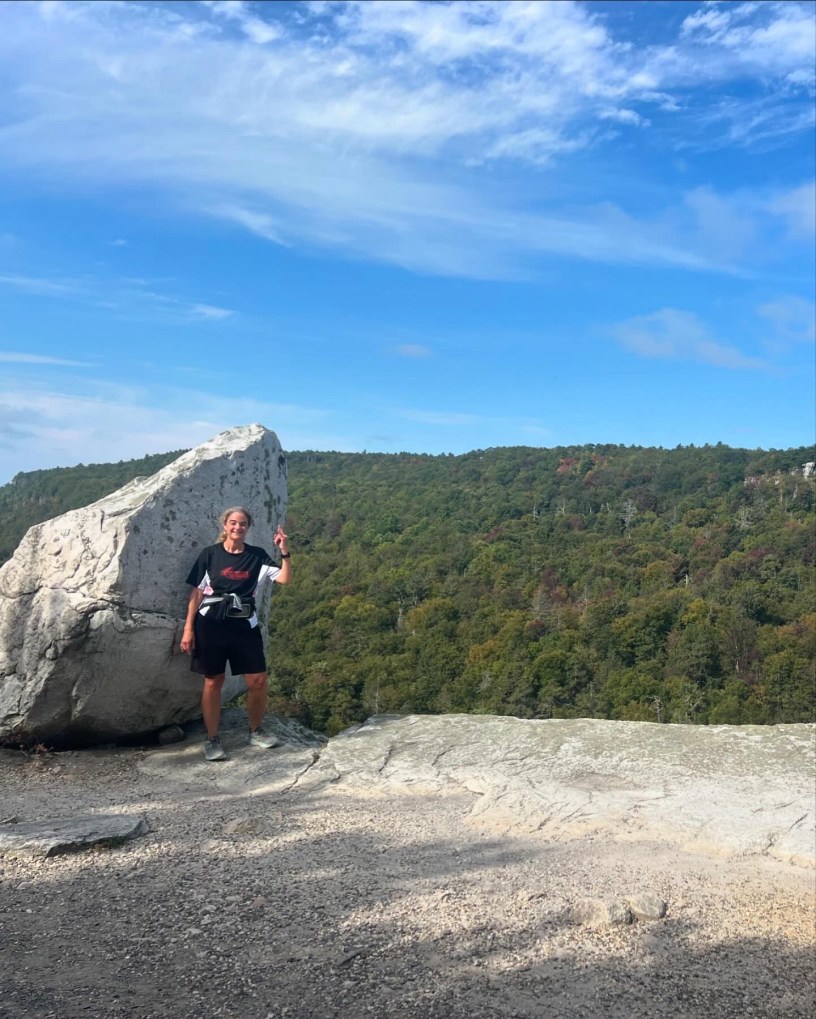
Life without running. That’s impossible to imagine and something I hope to never face – at least until I’m well past 90! Short seasons without running have come and gone – most recently this summer when foot pain forced me to take a month off. I missed the time on my feet and the thrill of exploring new places, but mostly because without it, my mental health suffers. As someone who has battled depression throughout my 54 years of life, I know without a doubt that when I’m consistently running I have a much better chance at keeping the darkness away. Reflecting back on all of my experiences with depression, I can confidently say that running has been my most powerful and effective tool for staying healthy.
First, I want to say that I completely understand the anguish of depression, when the pit seems bottomless and light no longer exists. I get it. I also realize how reading about someone’s experience with it can be distressing. I’ve read countless stories about people climbing out of the pit. But when I was in the thick of it, I couldn’t fathom doing anything they recommended and I believed (because the lies of depression drilled this into my head), that sure, it worked for someone else, but it would NEVER work for ME. When the claws of depression dig in fiercely, it’s nearly impossible to believe it’s ever going to get better. So I totally get it if you’re skeptical. My depressed mind refused to believe most things I read. But even if I didn’t believe it at the time, what I didn’t realize was that tiny seeds were being planted that would sprout in an unexpected moment and ultimately help me.
Depression’s hold and its lies relentlessly attack to keep us immobile. They’re notorious for distracting us from anything that’s good while preventing us from moving forward. I only know this because I’ve struggled with it so many times and it’s only through my lived experience that I can now remind myself that they are indeed lies. Because the lies are so insidious, we believe there’s no hope and it’s easier to remain still – and stuck. However, there’s one thing that the monster of depression can’t stand – when we start to move, build momentum and keep going. Momentum breaks the chains. Each time I go outside to run, it slowly awakens the part of me that’s suffocating from depression. Every run is another step towards victory.
The more times I’ve endured it, the more I’ve learned. When I’m stuck in a rut, feeling like a prisoner in my own mind, I know I have to force myself to move. That first step is undoubtedly the most excruciating. Sometimes it’s the most agonizing thing I do all day. The trick for me is to stop thinking. The moment I start contemplating, the lies of depression pounce. They convince me that I’m worthless and it’s pointless. But if I put one foot in front of the other and start to move, that’s when the magic starts to happen. My body starts to take over, doing its job of producing different hormones and neurotransmitters that will eventually change my thoughts and how I feel.
There’s tons of interesting research about the effects of movement, nutrition and lifestyle on our brains. (Check out the quotes and books at the end) Understanding these mechanisms helps me dismiss what the lies are telling me. The lies that say It doesn’t matter, just sit there. It’s never gonna help.
Despite every cell in my body resisting action, I know what the science says, and I know from experience that it works. That’s just enough to get me going. Sometimes it takes me 15-20 minutes of moving before I notice a subtle shift in my mind. I’m not saying a simple walk is going to instantly cure anything, but there’s a really good chance that it will lift my mood -even just a little- so that I can start to believe that doing this again tomorrow is a possibility. Sometimes I have to trick my mind by telling it I am only going to step outside and I can always go back in. Then I give myself permission to quit after a few steps. After a few steps, I always keep going. The momentum takes over.
Running consistently paralyzes the beast. When I force myself to run (or even walk) my thoughts are easier to tame. I’ve learned that if I skip more than a day, the beast starts to sneak up on me. I know from too many bad experiences that as difficult as it may be, I have to keep moving.
When I move it can’t catch me.
Believing that empowers me. I visualize the cells in my body responding and doing their job better because I’ve created the right conditions for them. It feels like teamwork, therefore it’s less intimidating. I tell the lies to shut up (sometimes out loud!) as I lace up and resist the urge to give up.
Running outside (in every kind of weather) is the most powerful weapon for me. Nothing compares to how fresh air, natural light, and the environment (especially woods and green space) dissipates the fog that engulfs my brain and ushers in a sense of peace. Of course I have to pay attention, which isn’t always easy. The more I move the easier it is to become aware – then it’s up to me to tell my mind to stop and to focus on my breath, or the birds or whatever I can find to distract me. Since I’m aware of my tendencies, as soon as I step outside I force myself from the very first step to stay in the moment.
When I was injured and unable to run, I walked instead. It was helpful, and if you’ve never run before, I highly encourage you to start there. Movement is what matters. Then challenge yourself and try to add in some running. For me, nothing compares to the exhilaration I get from a run. And the beauty is it stays with me long after I am finished. The runner’s high is real and recent research has pinpointed neurotransmitters that are responsible for this feel good sensation. (See The Joy of Movement). But we have to move to give our body a chance to work for us.
If you are in the throes of depression, I know that the thought of moving right now probably seems ludicrous and impossible. But what do you have to lose by putting on your shoes and going for a walk? You could always go back inside. And if you’ve experienced depression before, and are looking for a strategy to keep it far away, running is a powerful weapon. Not just for the positive effects it has on our biochemistry, but it also makes us feel better about ourselves because we’ve accomplished something. Try it outside where you will also experience the benefits and the calming effects of nature. Better yet, grab a friend for the social connection. Movement, nature, and social connection are huge factors proven to keep us healthy, not just physically, but mentally. And I can attest to that!
I know how challenging it is to get moving, but I know you won’t regret it. Even if you’ve never experienced mental health issues, research shows that exercise is crucial to stay healthy. There are endless benefits to running (cognitive, cardiovascular, musculoskeletal, etc.) but for me, the positive effect it has on my mental health is why I lace up. Here are just a few reasons why I run and want everyone to give it a try:
- Moments into a run I notice my thoughts shifting towards the positive
- It allows me to be outside in fresh air and natural light (proven to help my mood)
- Invigorates me
- Makes me proud that I took an initiative
- When I consistently run, depression and anxiety are less likely to occur
- No equipment is needed, and you can run anywhere
- The more I run the better I feel
- I feel strong and empowered
- Makes me feel like I’m being proactive
Check out the following quotes from The Joy Of Movement by Kelly McGonigal, PhD and Spark by John J. Ratey, MD. These books were very informative and empowering.
“Anything that keeps you moving and increases your heart rate is enough to trigger nature’s reward for not giving up. There’s no objective measure of performance you must achieve, no pace or distance you need to reach, that determines whether you experience an exercise induced euphoria. You just have to do something that is moderately difficult for you and stick with it for at least 20 minutes. That’s because the runner’s high isn’t a running high. It’s a persistence high.” The Joy Of Movement
“Psychologists call physical activity that takes place in a natural environment green exercise. Within the first five minutes of any physical activity in nature, people report major shifts in mood and outlook. Importantly, they don’t just feel better – they feel different, somehow both distanced from the problems of everyday life and more connected to life itself.” The Joy Of Movement
“Aerobic exercise has a positive impact on the entire range of depressive symptoms, regardless of whether they come individually, in the form of a mild episode, or conspire to form a disorder. Overall, I think of depression as an erosion of connections – in your life, as well as between your brain cells. Exercise reestablishes those connections.” Spark
“Aside from elevating endorphins, exercise regulates all of the neurotransmitters targeted by antidepressants. For starters, exercise immediately elevates levels of norepinephrine in certain areas of the brain. It wakes up the brain and gets it going and improves self-esteem, which is one component of depression. Exercise also boosts dopamine, which improves mood and feelings of wellness and jumpstarts the attention system. Dopamine is all about motivation and attention.” Spark
“The beauty of exercise is that it attacks the problem from both directions at the same time. It gets us moving, naturally, which stimulates the brain stem and gives us more energy, passion, interest, and motivation. We feel more vigorous… and unlike many antidepressants, exercise doesn’t selectively influence anything – it adjusts the chemistry of the entire brain to restore normal signaling. It frees up the prefrontal cortex so we can remember the good things and break out of the pessimistic patterns of depression. It also serves as proof that we can take the initiative to change something.” Spark
“Exercise is not an instant cure, but you need to get your brain working again, and if you move your body, your brain won’t have any choice. It’s a process, and the best strategy is to take it one step – and then one stride – at a time. Start slowly and build on it. At its core, depression is defined by an absence of moving toward anything, and exercise is the way to divert those negative signals and trick the brain into coming out of hibernation.” Spark

